
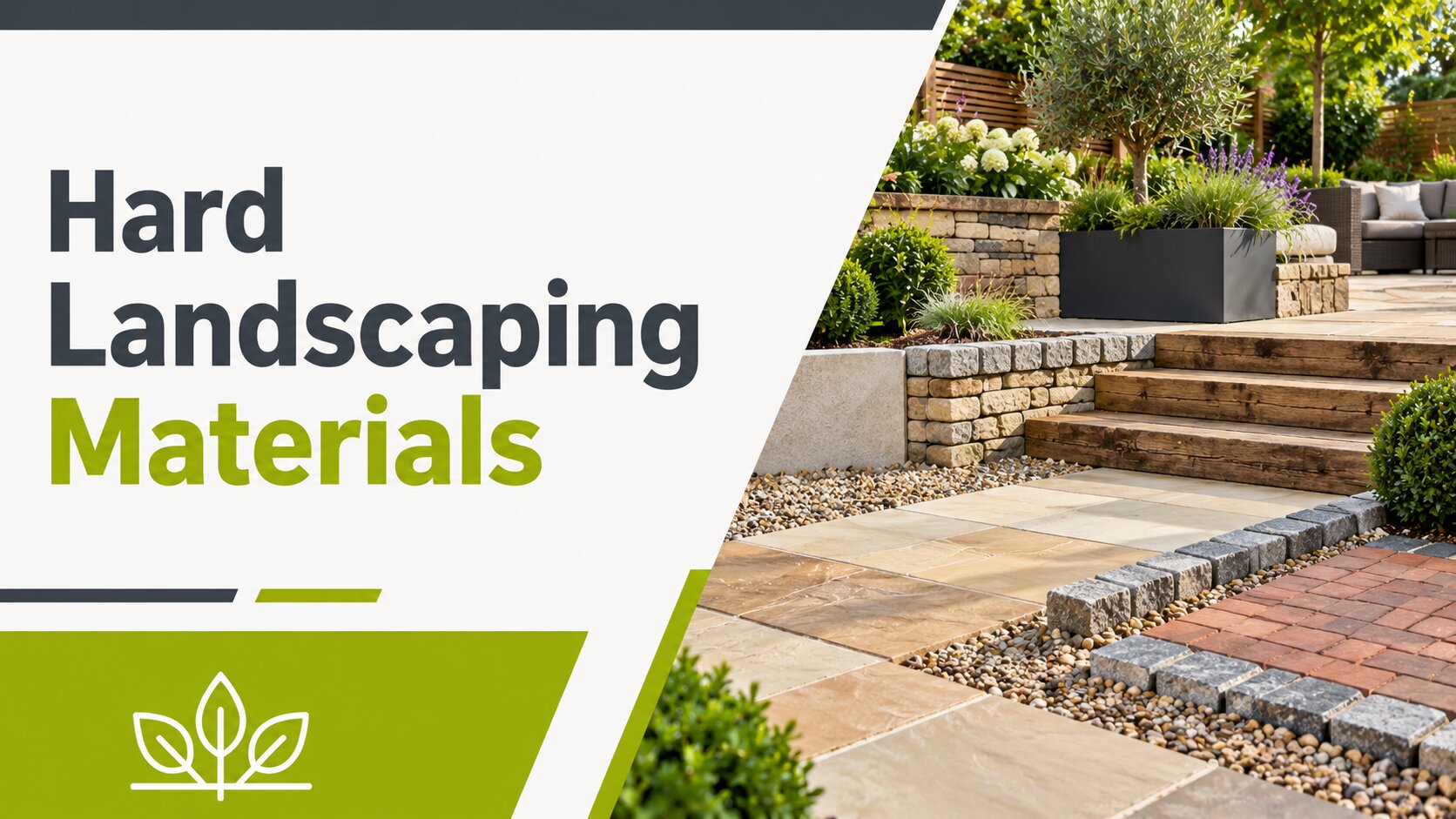

The best hard landscaping materials for UK gardens are porcelain (low-fuss and frost-proof), natural stone (character that ages beautifully), composite decking (durable and low-maintenance) and timber (warm but needs upkeep). The right choice depends on your budget, how much sun or shade you get, and how much cleaning you’re prepared to do.
A patio, path or seating area is often the thing that makes a garden feel properly finished. It’s the difference between “nice bit of grass” and “somewhere you actually want to spend a summer evening”. But the moment you start shopping around, you’re hit with a wall of jargon—porcelain, sandstone, limestone, composite, hardwood, softwood—and everyone seems to have a strong opinion.
Throw in the British weather, with its frost, endless drizzle and that lovely green algae that shows up every October, and choosing becomes genuinely tricky.
So here’s a plain-English guide to the main hard landscaping materials, with honest pros and cons, rough costs and a few tips we’ve picked up along the way. At Eden Horticultural, we’ve designed and built gardens across Essex since 2009, so we’ve laid our fair share of paving—and seen what holds up and what doesn’t.
What counts as hard landscaping materials (and why it matters)
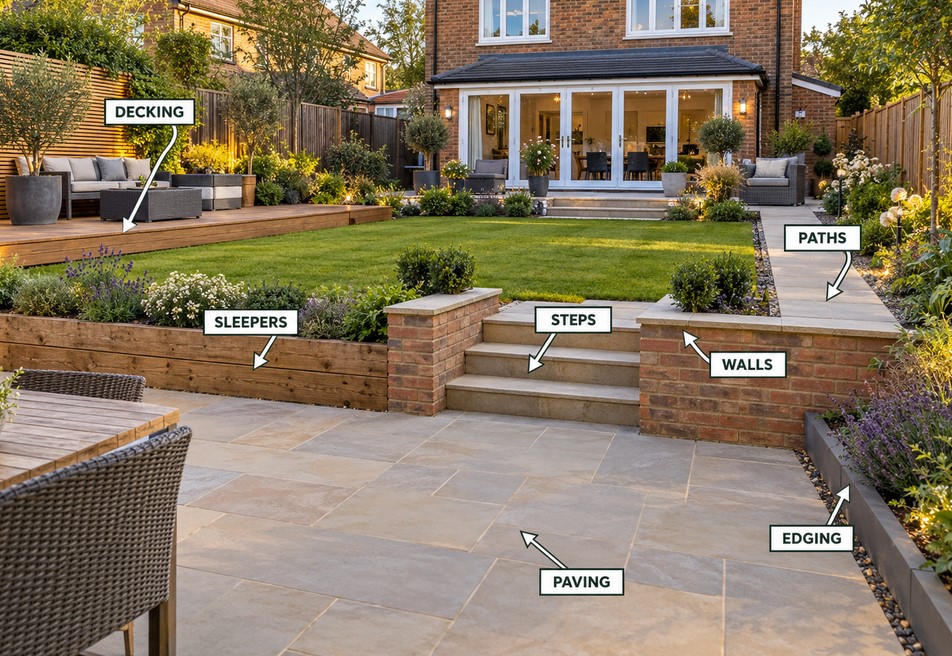
Hard landscaping covers all the non-living, structural parts of a garden: paving, paths, walls, steps, edging, sleepers, decking and gravel. Basically, everything that isn’t a plant.
Getting the material right matters more than people expect. Your choice affects:
- Safety — how slippery a surface gets when wet
- Longevity — whether it survives a few UK winters without cracking
- Maintenance — how many weekends you’ll spend scrubbing
- Appearance — whether it suits your house and garden style
- Budget — both upfront and over the years
One thing worth flagging early: what goes underneath the surface often matters as much as the surface itself. A gorgeous porcelain patio laid on a dodgy sub-base will still sink, crack and puddle. More on that later.
Porcelain paving (the low-fuss option that looks sharp)
Porcelain paving has become one of the most popular choices for UK gardens, and it’s easy to see why. It’s a dense, vitrified tile with very low water absorption—which is exactly what you want when frost is on the cards.
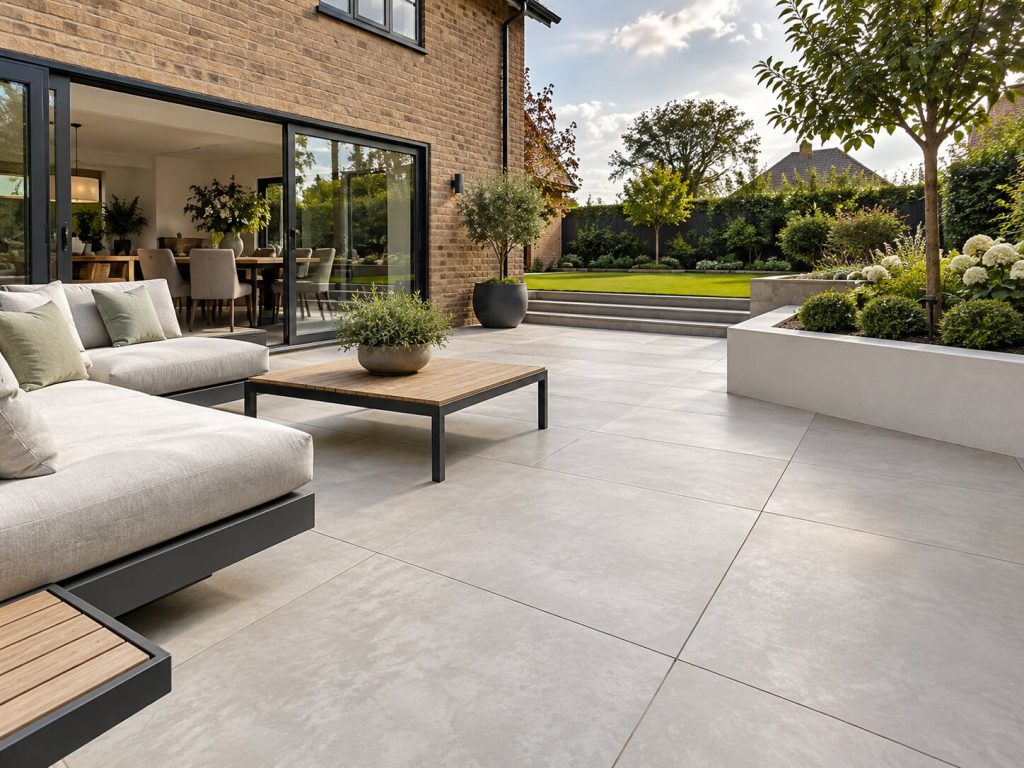
Because it barely absorbs water, porcelain is frost-resistant and won’t crack in the freeze-thaw cycle that damages more porous materials. It’s also brilliant at shrugging off stains, and the colour stays consistent from tile to tile.
Pros:
- Excellent stain and algae resistance
- Frost-proof and hard-wearing
- Low maintenance—usually just a sweep and occasional wash
- Huge range of finishes, including convincing stone and wood effects
Cons:
- Can look a little “show home” if not softened with planting
- Installation needs skill—a full mortar bed (never dot-and-dab), the right primer and proper grout
- Cutting requires a diamond blade, so it’s not a casual DIY job
A quick word on slip resistance: for outdoor use, look for a textured finish with an R11 rating. This matters especially in shaded, north-facing spots that stay damp. In many Essex gardens with lots of shade, we’ll steer clients towards a higher-grip porcelain to keep things safe underfoot.
Rough cost: £35–£65 per square metre for the tiles, with professional installation typically adding £100–£175 per square metre depending on the groundwork.
Natural stone (character, variation and a bit of honest upkeep)
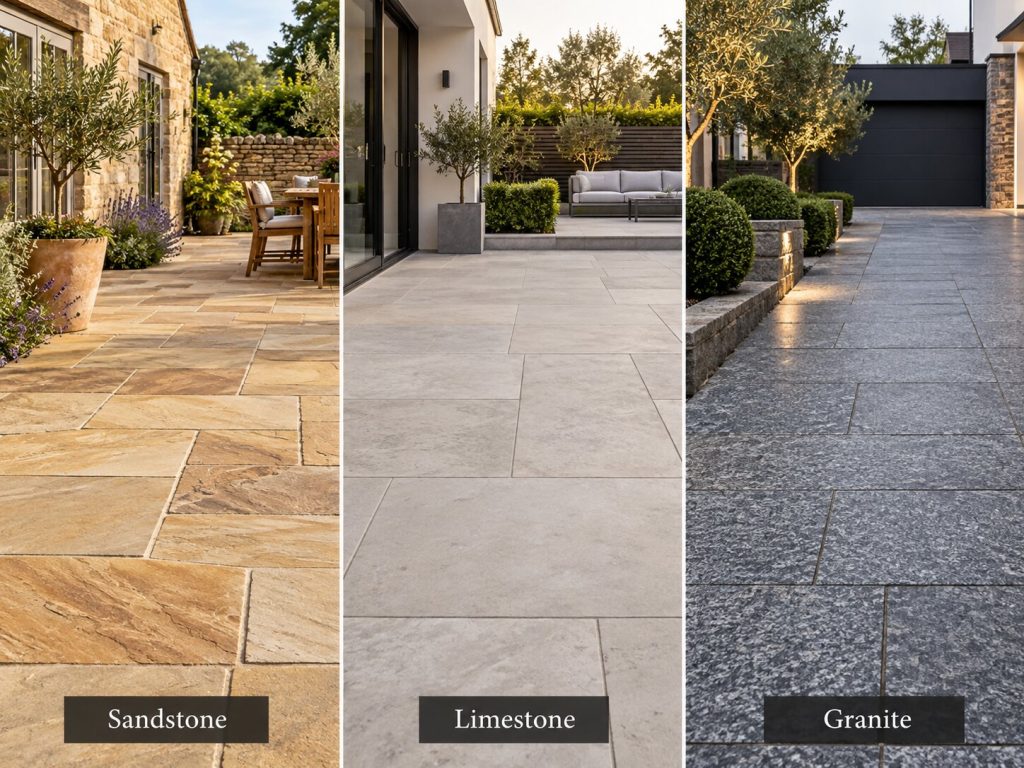
If porcelain is the tidy modern option, natural stone is the characterful one. No two slabs are identical, and that variation is exactly the appeal—it’s a look you simply can’t fake.
Sandstone
The most popular natural paving in the UK. It comes in warm, earthy tones and either a riven (textured) or sawn (smooth) finish. Sandstone is fairly porous, so it benefits from sealing and will weather gently over time. That patina is part of the charm—though it does mean a bit more upkeep.
Limestone
Smoother and more contemporary than sandstone, with softer, more uniform tones. One thing to watch: limestone reacts badly to acidic cleaners, so keep the harsh chemicals well away. It develops a lovely patina as it ages.
Granite (and other dense stones)
Extremely hard-wearing and dense, granite is the premium end of natural stone. It’s sleek, resists staining well and lasts for decades—though it usually costs more than sandstone or limestone.
General natural stone guidance:
- Pros: timeless, unique variation, perfect for cottage and traditional gardens
- Cons: more prone to algae and lichen (especially in shade), often needs sealing, can stain
- Frost resistance depends heavily on stone type and quality—cheap sandstone can flake in a hard winter
Whatever stone you choose, correct falls for drainage are essential. Puddles are how you end up with green, slippery patches.
Rough cost: £40–£80 per square metre for the stone.
Composite decking (the material that behaves itself)
Composite decking is made from a blend of recycled wood fibres (usually 50–60%) and recycled plastic. The result looks like timber but behaves much better outdoors.
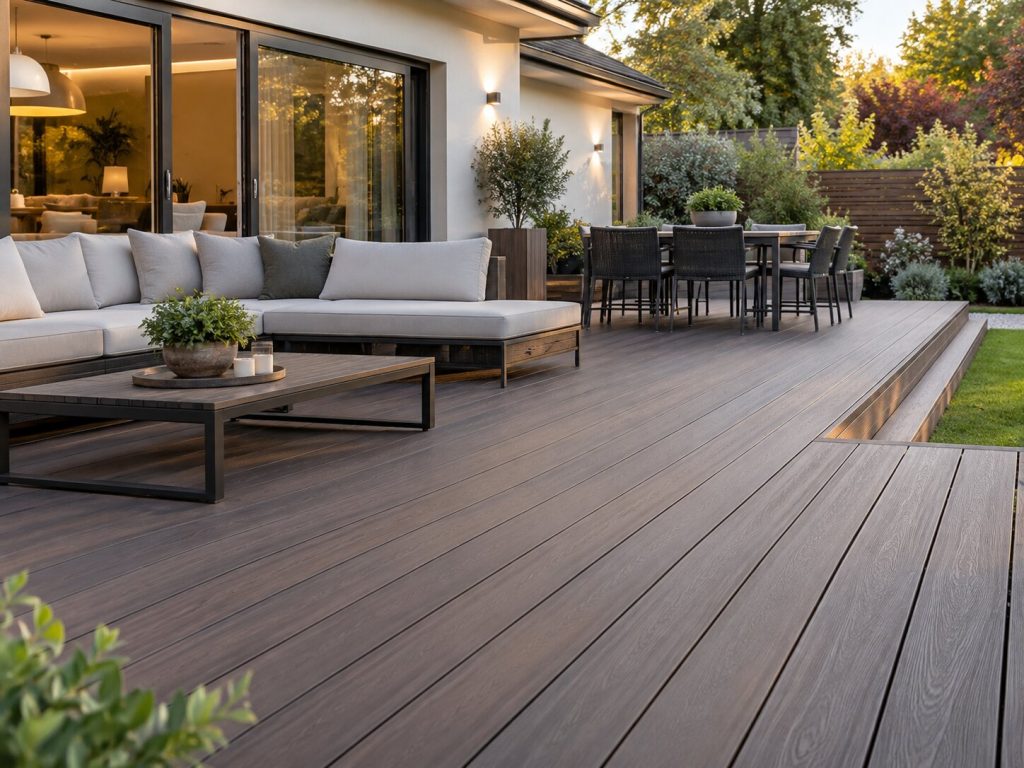
It’s a strong choice for level entertaining areas, spaces around hot tubs, and smooth transitions from the house into the garden.
Pros:
- No sanding, staining or sealing—ever
- Resists rot, warping and insect damage
- Splinter-free, which is great for kids and bare feet
- Textured, slip-resistant surface
- Lasts 25+ years, versus roughly 10–15 for timber
Cons:
- Higher upfront cost than softwood
- Dark boards can get genuinely hot in direct sun
- Cheaper boards can look a bit uniform
- Needs correct expansion gaps and ventilation during installation
Here’s the honest bit: composite isn’t magic. Shaded, damp decks still grow algae, so you’ll need the occasional wash with warm soapy water. That said, for a busy household that wants a deck without the annual chore list, it’s hard to beat.
Rough cost: boards from around £16.50 per square metre, with quality capped boards costing more.
Timber (natural warmth, but it needs a bit of love)
There’s nothing quite like real wood underfoot. Timber decking, sleepers and pergola frames bring a warmth and softness that other materials struggle to match.
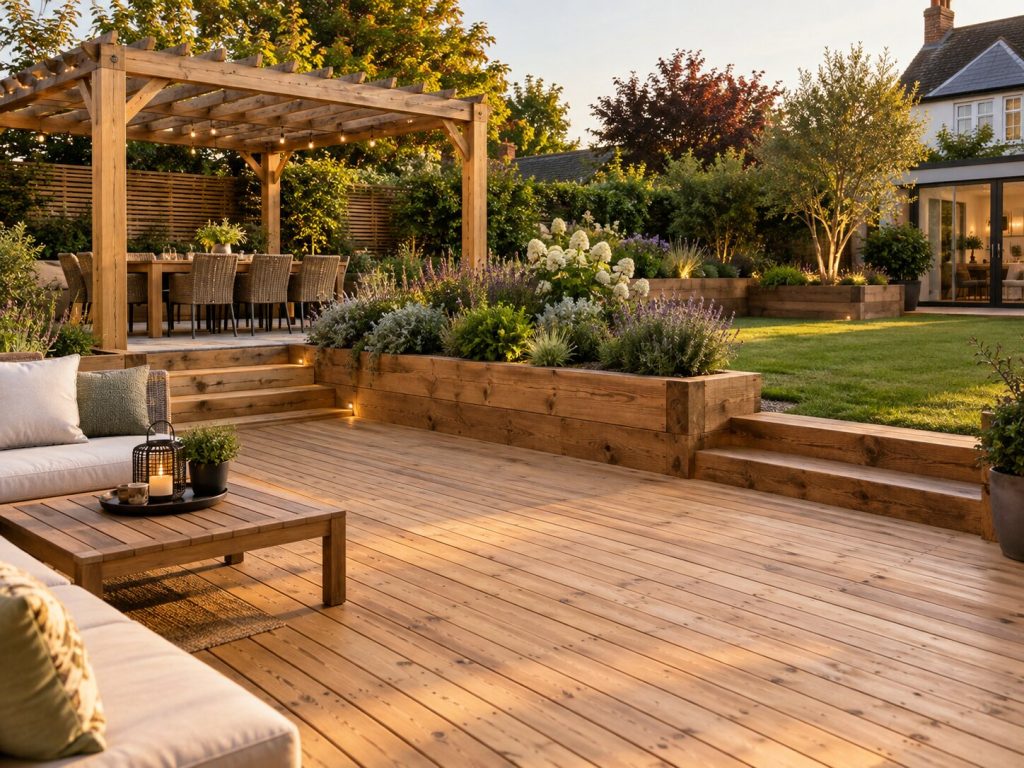
The main choice is hardwood versus softwood. Hardwoods like oak and ipe are denser, more durable and pricier. Softwoods like pine and larch cost far less but need more attention—and can struggle badly in damp, shaded spots, sometimes rotting within five years if neglected.
Whichever you pick, timber wants regular oiling or staining to keep it looking good and lasting well. Expect to spend somewhere in the region of £150–£400 a year on maintenance for a decent-sized deck. It can also get slippery when wet and may splinter as it ages.
Timber shines in softer, more natural garden schemes and family-friendly zones—provided you’re happy to look after it. If your dream is “fit-and-forget”, timber probably isn’t your material.
Which are the best hard landscaping materials for your garden?
There’s no single winner. Here’s how the main options stack up:
| Material | Look & feel | Maintenance | Slip risk (wet) | Lifespan | Cost band | Best for |
| Porcelain | Sleek, modern | Very low | Low (textured) | 25–40+ yrs | Medium–high | Contemporary patios, dining areas |
| Natural stone | Characterful, warm | Medium | Medium | 20–30+ yrs | Medium | Cottage & traditional gardens |
| Composite decking | Wood-look, uniform | Low | Low | 25+ yrs | Medium | Busy households, hot tub surrounds |
| Timber decking | Natural, soft | High | Medium–high | 10–25 yrs | Low–medium | Softer schemes (if maintained) |
The “best” material really comes down to how you’ll use the space, how much sun or shade it gets, and how you feel about maintenance. If you’re torn, we’re always happy to talk it through.
How to choose the right hard landscaping materials: a simple checklist
Run through these before you commit:
- How will you use it? Dining, kids, pets, hot tub?
- Sun or shade? Shaded spots go green faster and dry slowly.
- Drainage and levels — do you need falls or a permeable surface?
- Maintenance tolerance — weekend scrubber or “please, no chores”?
- Style — period property or contemporary new-build?
- Budget and lifespan — think cost-per-year, not just upfront.
- Safety — steps, edges and slip resistance.
Installation realities (where good materials get ruined)
This is the unglamorous bit, but it’s what stops your lovely patio turning into modern art:
- Sub-base: a properly compacted MOT Type 1 base is non-negotiable in the UK
- Bedding: always a full mortar bed for paving—dot-and-dab leaves hollow spots that crack and hold water
- Jointing: the right pointing or resin compound keeps weeds and frost damage at bay
- Edging: restraint stops slabs creeping over time
- Water management: keep falls running away from the house, ideally 150mm below the damp-proof course
We see a lot of problems caused by rushed ground preparation. If you’d like it done properly first time, that’s exactly the sort of thing we can help with.
Maintenance tips for hard landscaping materials in the UK
- Sweep regularly—decaying leaves encourage moss and staining
- Wash gently with warm soapy water; go easy on the pressure washer
- Never use acidic cleaners on limestone
- Tackle algae early in shaded gardens, before it spreads
- Seal natural stone when needed, but don’t bother sealing porcelain—it doesn’t need it
Frequently asked questions
What are the most low-maintenance hard landscaping materials in the UK?
Porcelain and composite decking are the clear winners. Both resist staining and rot, and usually only need a sweep and occasional wash—no sealing, oiling or sanding required.
Is porcelain paving slippery in the rain?
Not if you choose a textured, outdoor-rated finish (look for R11). Smooth polished porcelain isn’t suitable outside, but purpose-made external paving offers good grip even when wet.
Do I need to seal natural stone paving?
Usually, yes—especially porous stones like sandstone and limestone. Sealing helps resist staining and slows down algae. Denser stones like granite need it far less.
What’s best for a shaded garden that goes green quickly?
Porcelain with a high-grip finish is your friend here. Its non-porous surface gives algae far less to cling to, and it wipes clean easily. Avoid untreated softwood, which struggles in damp shade.
Is composite decking better than timber?
For low maintenance and longevity, yes. Composite lasts 25+ years with barely any upkeep. Timber is cheaper upfront and has a lovely natural character, but it needs regular treatment and doesn’t last as long.
How long do these materials last in UK weather?
Roughly: porcelain 25–40+ years, natural stone 20–30+ years, composite decking 25+ years, and timber decking anywhere from 10 to 25 years depending on the wood and how well it’s cared for.
What’s the most cost-effective patio material long-term?
Once you factor in maintenance and replacement, porcelain and composite often work out cheaper over 15–20 years, despite the higher upfront cost. Cheap softwood usually costs more in the long run.
Can you mix materials?
Absolutely, and it often looks fantastic. Porcelain paving with timber-clad steps, or stone framed by planting, adds warmth and interest. Mixing materials is one of our favourite ways to give a garden real personality.
Ready to plan your patio or path?
Choosing the right hard landscaping material is really about matching your lifestyle to your site—how you’ll use the space, how much light it gets, and how much upkeep you fancy.
If you’d like a second opinion, or a full design-and-build, we’d love to help. Eden Horticultural has been creating gardens across Essex since 2009. From garden design and soft and hard landscaping to ponds, planting and ongoing maintenance, we handle the lot.
Get in touch through our website and let’s talk about what’ll work best for your garden.