
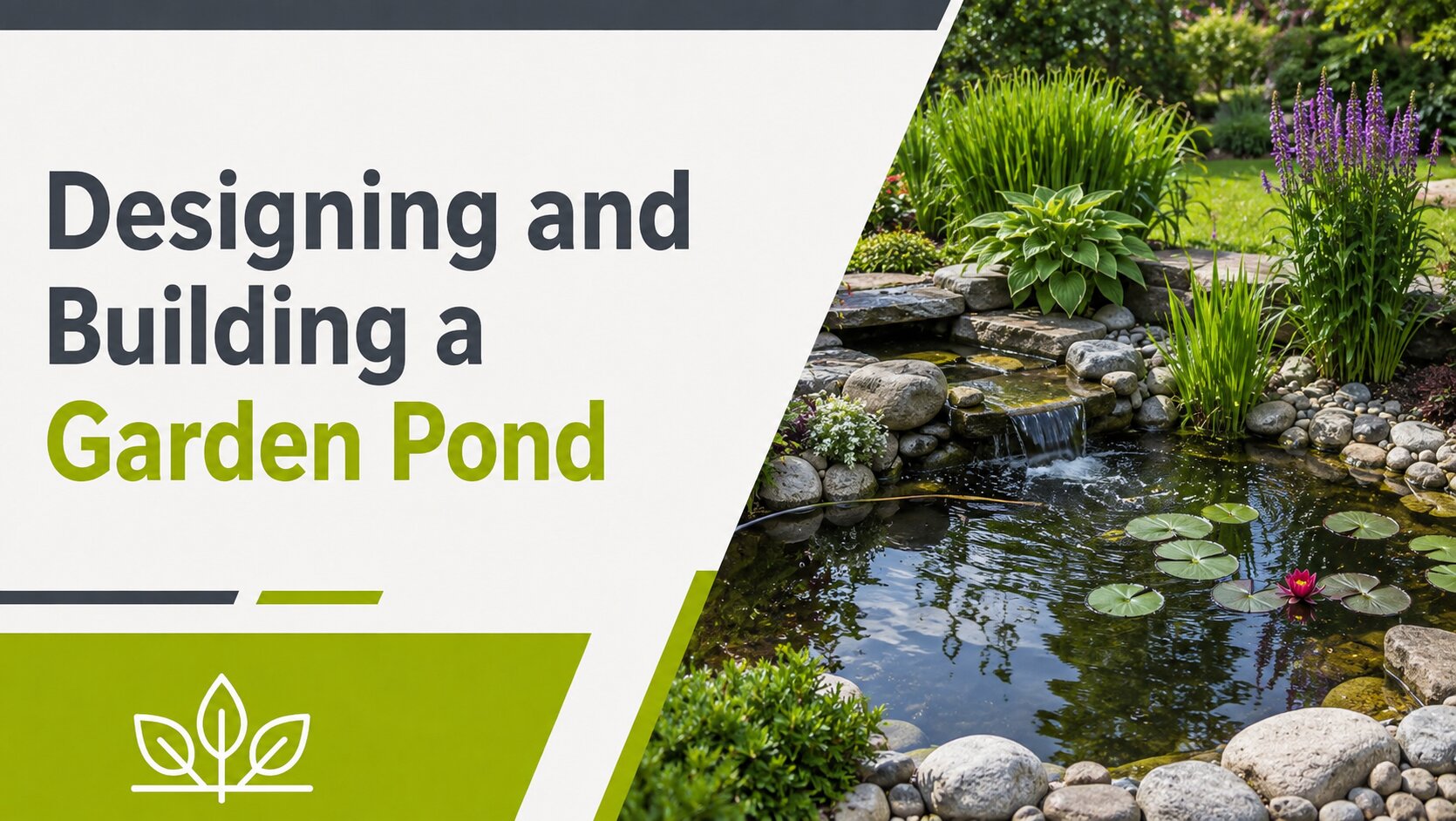

Quick answer: Designing a garden pond for a modern UK landscape involves choosing the right pond type, finding the ideal location, selecting appropriate materials, and planning for filtration, planting, and maintenance. Done well, a pond adds genuine architectural interest, supports local wildlife, and transforms a garden into something you actually want to spend time in.
A well-designed pond is one of those rare things that makes a garden feel truly complete. Not in a “we’ve ticked the water feature box” way—but in the way a well-placed sculpture or a perfectly positioned seating area does. It draws the eye. It adds sound and movement. And unlike most garden features, it gets better every year as the planting matures and wildlife moves in.
We’ve been designing and building bespoke landscapes in Essex since 2009, and ponds remain one of our most requested features. Done well, they’re spectacular. Done badly—with a wonky edge, a pump that’s two sizes too small, and a liner that shifts after the first heavy rain—they become a source of regret. This guide is here to make sure you avoid the latter.
Why a pond works so well in a modern garden
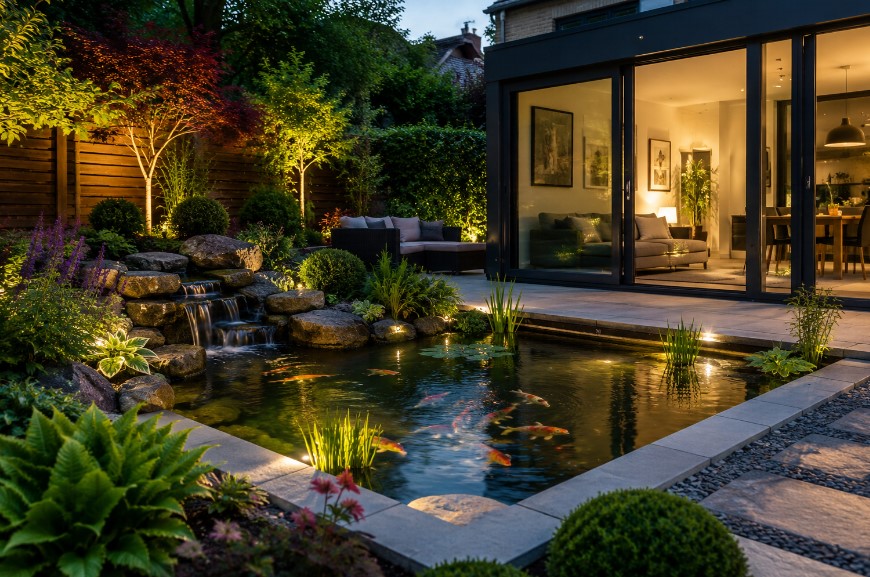
Modern gardens tend to favour clean lines, considered materials, and deliberate simplicity. A pond fits that brief better than most people expect. Reflective water creates an instant architectural quality, borrowed light plays off the surface throughout the day, and there’s a stillness to a well-placed pond that softer planting simply can’t replicate.
There’s also the wildlife angle. Frogs, newts, dragonflies, and birds will find a pond within weeks of installation—often days. If you’ve got children, that kind of living, breathing garden feature is worth more than any trampoline.
What kind of pond are you actually building?
Before you pick up a spade or browse pond liner suppliers, it’s worth being clear on what kind of pond you want. The three main categories have very different demands:
| Pond type | Ideal depth | Filtration | Maintenance | Design style |
| Wildlife pond | 60–90cm | None required | Low | Naturalistic, informal |
| Ornamental pond | 60–90cm | Basic pump/filter | Medium | Formal or contemporary |
| Koi pond | 1.2–1.8m minimum | High-spec filtration | High | Formal, architectural |
Wildlife ponds are the most forgiving—and, honestly, the most rewarding if your main goal is biodiversity. Koi ponds are beautiful but genuinely demanding. If someone tells you a koi pond is low-maintenance, they haven’t owned one.
Choosing the right location (this is where most ponds win or lose)
The single most common mistake we see in garden pond design is a poorly chosen location. A pond needs roughly 5–6 hours of sunlight daily. Too much shade and plants won’t thrive. Too much direct sun and you’ll spend the summer fighting algae.
Avoid overhanging trees if you can. Leaf drop clogs filters, decomposes on the pond floor, and releases tannins that turn the water brown. If a tree’s unavoidable, budget for a quality autumn net.
Also—before you dig anything—check for underground utilities. Gas pipes, electrical cables, drainage runs: all of these have ended up being very expensive surprises. In Essex, as in most of the UK, your local council or a utility mapping service can help. We always recommend this step before any significant excavation.
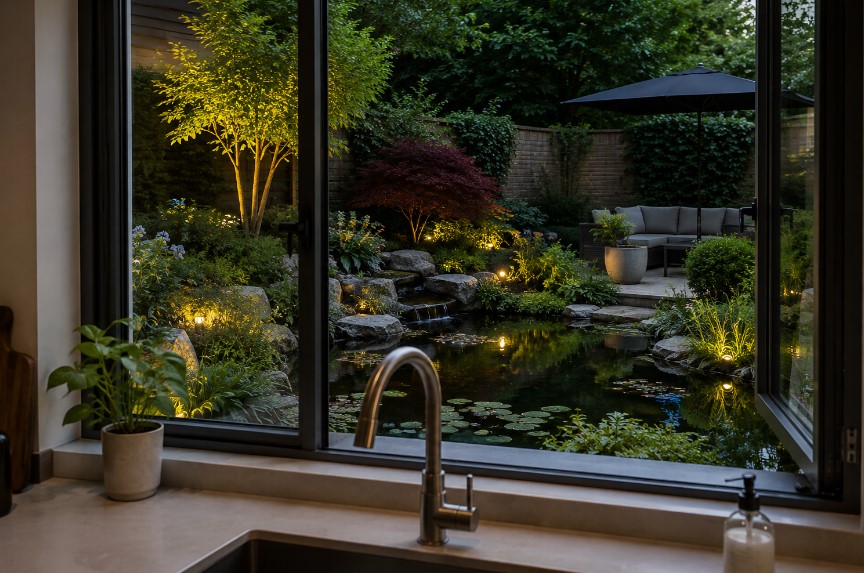
Finally, consider the view from your house. The best ponds are positioned to be seen from a key vantage point—a kitchen window, a patio seating area, a bedroom. A pond you can only appreciate by walking to the bottom of the garden is a missed opportunity.
Not sure where your pond would work best? That’s exactly the kind of thing we can help with—contact us for an initial layout conversation.
Modern pond design principles (so it looks intentional)
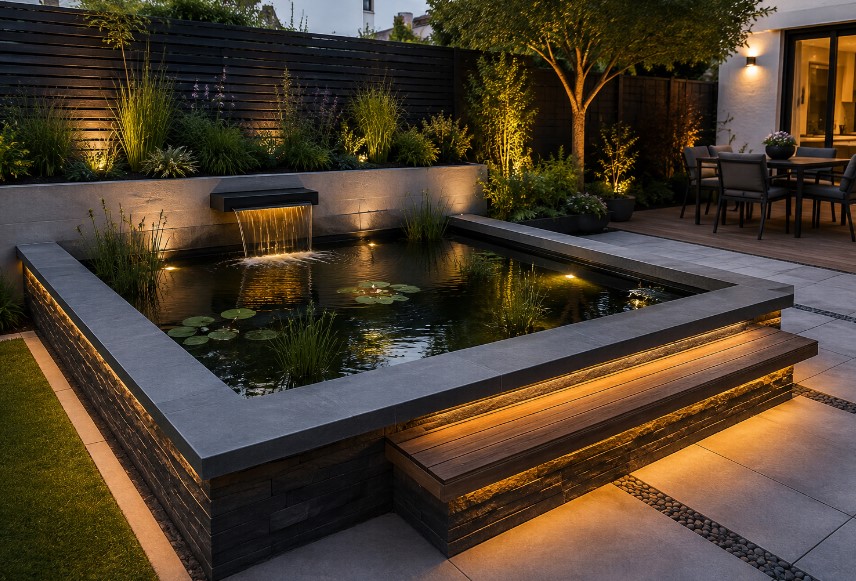
Clean geometry works well in contemporary gardens: crisp rectangles, simple circles, or long narrow rills. Raised ponds add an extra dimension—they bring the water up to viewing level and allow for built-in seating on the coping edge, which is genuinely useful.
Edging makes or breaks the look. Porcelain paving or natural stone in a consistent material to the wider terrace creates continuity. Metal edging strips give a sharp, architectural line. Railway sleepers work well in a more relaxed, naturalistic setting.
For movement, subtle is usually better than dramatic. A gentle spillway or a simple surface bubbler suits modern garden pond design far better than a full waterfall. Underwater lighting is worth the investment—a well-lit pond at dusk is a completely different experience to one that disappears into darkness after dinner.
Materials and build method: liner, preformed, or concrete?
Flexible EPDM liner is the workhorse of pond construction. It’s durable (25+ years when correctly installed), adaptable to any shape, and wildlife-safe. It needs a quality protective underlay beneath it, and the edges need to be properly secured—but for most residential ponds, it’s our default recommendation.
Preformed fibreglass or plastic shells are quicker to install but limit you to fixed shapes and sizes. Fine for a small, simple pond; limiting if you want something design-led.
Concrete and fibreglass-rendered ponds are the premium option—especially for formal, raised, or koi ponds where a hard, cleanable surface is essential. The upfront cost is higher, but the finish and longevity are excellent.
The technical bits you really shouldn’t skip
This is where a lot of DIY ponds quietly fail. A few key points:
Depth: Wildlife ponds work well at 60–90cm. Koi ponds need a minimum of 1.2m—ideally 1.5–1.8m—to prevent dangerous temperature swings and avoid the risk of freezing solid in a UK winter. A shallow koi pond in February is a serious problem.
Filtration: Right-size your pump and filter for the actual volume of water, not the minimum spec. An undersized filter is the most common cause of green, murky water.
Electrics: Any outdoor electrical work for pumps, lighting, or UV clarifiers should be installed by a qualified electrician using outdoor-rated cabling and RCD protection. This isn’t an area to cut corners—both legally and practically.
Drainage: The UK gets a lot of rain. Plan an overflow route so a heavy downpour doesn’t lift your liner or flood the surrounding garden.
Pond installation in the UK comes with specific considerations around climate, ground conditions, and—particularly in Essex—clay-heavy soil that affects drainage and excavation cost. If you’re unsure about any of this, get in touch and we can talk through the spec with you.
Planting for a modern pond: less chaos, more structure
Good pond planting is edited, not encyclopaedic. You want three zones: marginals at the edges (plants like iris, rush, and pickerel weed), true aquatics in the water (waterlilies for coverage and shade), and oxygenators beneath the surface (hornwort and water milfoil are reliable UK choices).
For a modern look, repeat a single marginal plant in groups rather than using 20 different species. A bold stand of Iris pseudacorus or a mass of Pontederia cordata reads as intentional. A bit of everything reads as chaos.
DIY vs professional: an honest assessment
Confident DIYers can absolutely tackle smaller, informal wildlife ponds with a flexible liner and some patience. The margin for error is relatively forgiving.
Where things tend to go wrong: uneven ground levels (water finds its own level, and so does any embarrassment), incorrectly sized filtration, poorly finished edging, and electrical work that doesn’t meet safety standards.
For raised ponds, koi-spec builds, formal modern designs, or any pond that forms part of a wider landscaping scheme—hard landscaping, levels, planting, lighting—professional installation genuinely pays for itself. We’ve rescued a fair few DIY ponds over the years, and the repair cost often exceeds what a professional build would have cost from the start.
Keeping it beautiful: quick maintenance overview
- Weekly (spring/summer): Check pump flow, top up water levels, remove algae buildup
- Monthly: Clean filters, check water quality if keeping fish
- Autumn: Net the pond to catch leaf fall, trim back dying marginals
- Winter: Keep a small area ice-free if you have fish; remove pump if temperatures drop significantly
A well-built pond in good condition needs perhaps 30 minutes of attention a week at peak season. That’s a reasonable trade.
Frequently asked questions
How much does it cost to build a garden pond in the UK?
Costs vary by size and complexity. A small garden pond (2–3m) typically costs between £1,500 and £3,500 professionally installed. Medium ponds (4–6m) run from £4,000 to £7,500, and larger or more complex builds can reach £15,000 or more. DIY costs are lower but depend heavily on materials and equipment chosen.
Do I need planning permission for a garden pond in the UK?
In most cases, no. Domestic garden ponds are considered permitted development. Exceptions include sites within conservation areas, areas prone to flooding, or land with specific environmental designations. It’s always worth checking with your local planning authority before starting.
What’s the best pond depth for UK winters?
For wildlife or ornamental ponds, 60–90cm is generally sufficient. For koi ponds, a minimum of 1.2m is required—and 1.5m to 1.8m is strongly recommended, particularly in colder regions. Shallow ponds risk freezing solid during prolonged cold spells, which can be fatal for fish.
Is a wildlife pond easier to maintain than a koi pond?
Significantly easier. A wildlife pond requires no filtration, no specialist feeding schedule, and tolerates far more natural variation in water quality. A koi pond demands consistent water testing, high-spec filtration, and careful management of stocking density. Both are rewarding—but they’re not comparable in terms of time investment.
How do I stop my pond going green?
Green water is usually caused by algae—most often a result of too much direct sunlight, excess nutrients, or insufficient filtration. A UV clarifier will clear the water quickly. Longer term, adding aquatic plants to cover 40–60% of the surface area starves the algae of light. Avoid overfeeding fish, which adds excess nutrients.
What’s the best edging for a modern garden pond?
Porcelain or natural stone coping in a material consistent with your wider terrace works best in contemporary designs. For a sharper, more minimal look, consider metal edging strips. Raised pond coping that doubles as seating is an increasingly popular option—both practical and genuinely stylish.
Can you build a pond in a small garden?
Absolutely. A small raised pond can work in even a compact courtyard garden. The key is proportion—scale the pond to the space rather than defaulting to a standard size. Some of the most effective ponds we’ve built in Essex have been modest in size but perfectly placed.
Are ponds safe for children and pets?
With the right precautions, yes. Options include raised pond designs (which remove the open water at ground level), mesh covers just below the water surface, and pond safety grilles. We can advise on child-safe design approaches as part of any garden project.
How long does pond installation take?
A small to medium pond typically takes 2–5 days for professional installation, depending on site access, ground conditions, and the complexity of the design. Larger builds or those integrated into a wider landscaping project will take longer.
Can Eden Horticultural design and install a pond as part of a full landscaping project?
Yes—and this is often where ponds look their best. We design and build ponds as standalone features or as part of comprehensive garden projects across Essex and the surrounding areas, combining hard landscaping, planting, lighting, and water features into a cohesive design. If you’d like to discuss your garden, we’d love to hear from you.
Ready to start planning your pond?
Whether you’ve got a rough sketch on the back of an envelope or you’re still at the “could this even work in my garden?” stage, we’re happy to talk it through. We’ve been creating bespoke landscapes in Essex since 2009, and garden pond design and fitting is one of the things we genuinely enjoy most.
Get in touch with our team to discuss your ideas, ask questions, or book an initial consultation. We offer garden pond design and installation as both standalone projects and as part of full modern landscaping schemes—whatever your garden needs, we’ll make it work.