
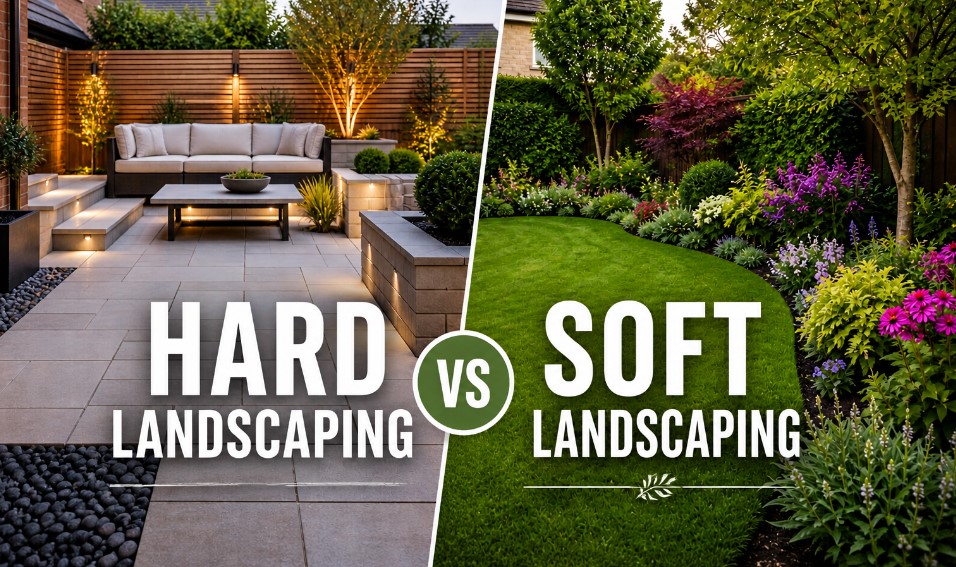

If your garden were a band, hard landscaping would be the drummer keeping the beat, while soft landscaping would be the lead singer getting all the attention. Both are entirely essential for a good performance, but they play very different roles.
Understanding how these two elements work together is the secret to a brilliant outdoor space. Hard landscaping gives you the practical structure, like somewhere flat to put your chair and a dry path to the shed. Soft landscaping brings the colour, life, and movement that turns a sterile plot into a proper garden.
If you are based in Essex and want a garden plan that offers a dream space grounded in absolute reality, we can help. Below, we explain exactly what sets these two disciplines apart, how they impact your budget, and how to strike the perfect balance for your home.
What hard landscaping is (and why it’s called ‘hard’)
Hard landscaping refers to the non-living, structural elements of your garden. These materials form the “bones” of your outdoor space, dictating the flow, function, and levels of the site.
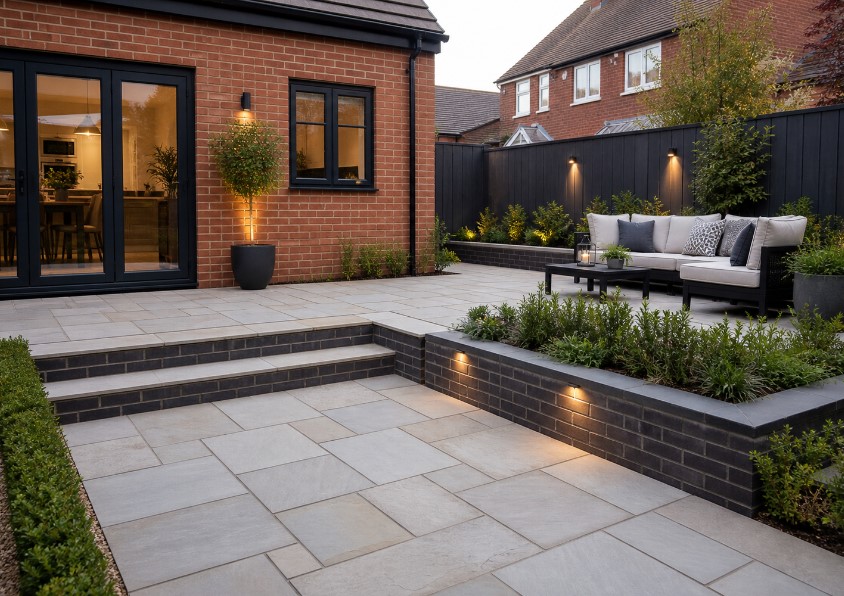
Some common hard landscaping UK examples include:
- Patios and paving (natural stone, porcelain, or concrete)
- Paths and edging
- Steps, retaining walls, and timber sleepers
- Driveways and courtyards
- Fencing, pergolas, and raised beds
- Built ponds and water features
The primary benefit of a solid hard landscaping service is durability. It defines your functional spaces, improves accessibility, and handles practical headaches like drainage. While surfaces like porcelain are wonderfully low-maintenance, it is worth remembering that nothing in a garden is entirely maintenance-free.
Because hard landscaping involves groundworks, managing levels, and laying sub-bases, professional installation is crucial. A poorly laid patio will quickly become a paddling pool after a heavy downpour.
What soft landscaping is (the living, growing bit that steals the show)
Soft landscaping covers all the living, growing elements, alongside the soil and growing media that support them. This is where the magic really happens, bringing texture, scent, and seasonal interest to the space.
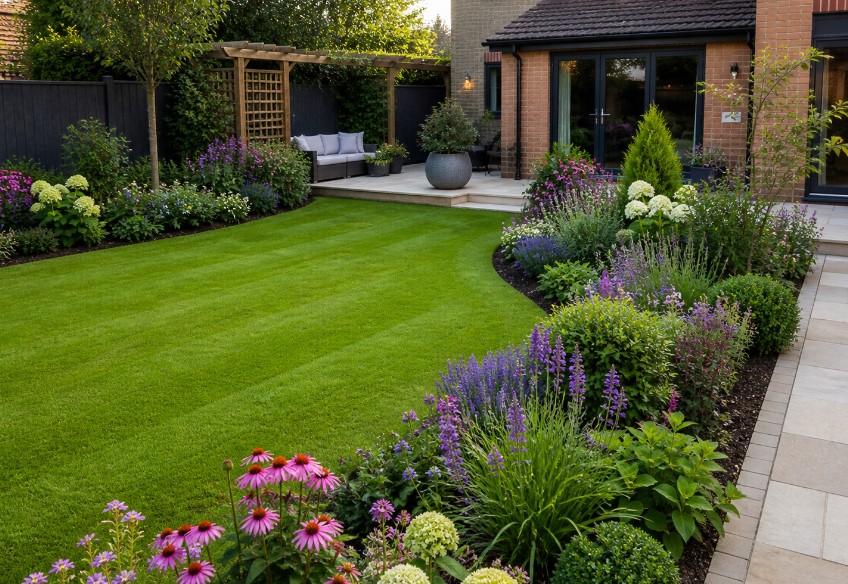
Typical soft landscaping UK features include:
- Lawn installation and turfing
- Flower beds and herbaceous borders
- Trees, shrubs, hedging, and topiary
- Planting plans and nursery-led planting schemes
- Soil conditioning, compost, and mulch
Soft landscaping softens the harsh lines of brick and stone. It provides vital habitats for wildlife, offers privacy through clever screening, and changes beautifully with the UK seasons.
Of course, living things require a bit of thought. You need the right plant in the right place, taking sun, shade, wind, and soil type into account. There is also an ongoing maintenance expectation. Plants will need pruning, feeding, and watering, and weeds are notoriously committed to taking over if you turn your back for too long.
Soft vs hard landscaping: the quick comparison
| Feature | Hard landscaping | Soft landscaping |
| Purpose | Structure, access, and function | Character, colour, and biodiversity |
| Materials | Stone, wood, porcelain, brick | Plants, soil, turf, mulch |
| Installation | Often requires heavy groundworks | Seasonal planting windows |
| Cost drivers | Materials, access, ground prep | Plant sizes, soil prep, irrigation |
| Maintenance | Cleaning, jointing, sweeping | Pruning, feeding, weeding, mowing |
| Lifespan | Decades | Living cycles (seasonal to decades) |
| Best for | Dining zones and stable access | Softening boundaries and wildlife |
In most UK gardens, the absolute best results come when the hard bits behave themselves and the soft bits get to be fabulous.
When you need both (which is most of the time, in all honesty)
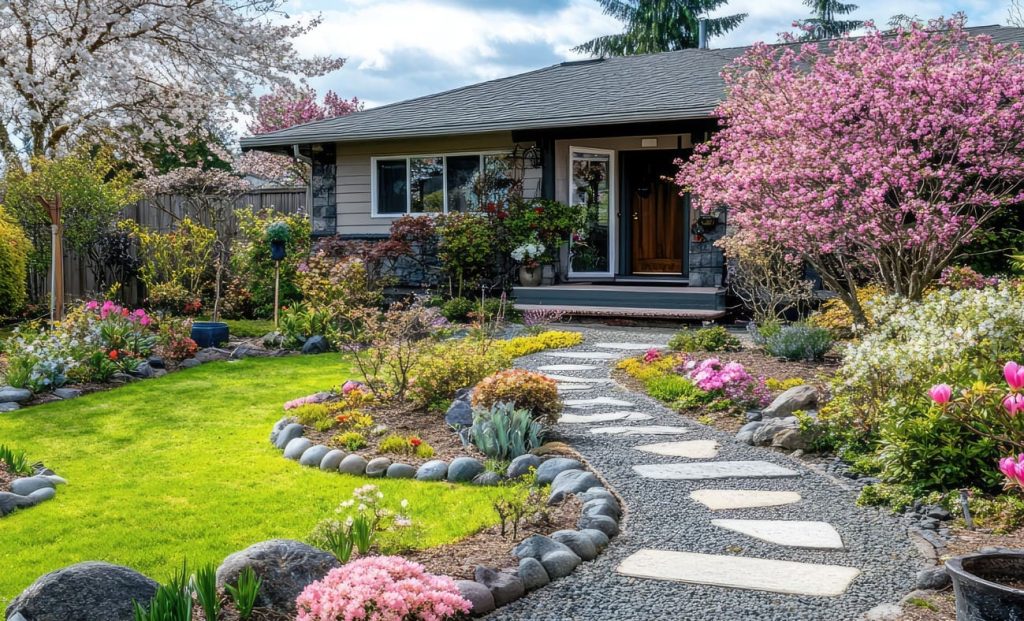
While there are rare instances where a tiny courtyard might be 90% paving, or a wildlife meadow might skip paths entirely, almost all successful projects rely on a blend of both. Hard landscaping creates the zones where you eat, play, and relax. Soft landscaping provides the shade, eco-value, and visual connection to your home.
Take a typical family garden. You need a robust patio for the barbecue and a durable lawn for football practice. But you also need native hedging for privacy and colourful borders to make the space feel welcoming.
Alternatively, a modern garden might rely on crisp paving lines and gravel paths, softened perfectly by architectural grasses and specimen trees. If you need help visualising how these elements fit together on your specific plot, our garden consultancy service is a great place to start.
Costs, timing and disruption (aka the bit everyone politely asks about first)
Cost is always a primary consideration for any garden landscaping project. For hard landscaping, prices are heavily influenced by site access, waste removal, and your choice of materials. Moving tonnes of soil out of a terraced garden with no side access will always cost more than a flat plot with a wide driveway.
For soft landscaping, costs depend largely on plant sizes. Buying semi-mature trees offers instant impact but costs significantly more than planting small whips and waiting for them to grow. Soil improvement is another hidden cost; poor soil must be conditioned before any planting plan can succeed.
A typical project follows a logical sequence:
- Garden landscape design and consultation
- Groundworks and drainage
- Hard landscaping build
- Soil preparation and soft landscaping (planting/turfing)
- Aftercare and maintenance
Timing matters, too. Hard landscaping can happen for most of the year, weather permitting. Soft landscaping, however, heavily favours the autumn and spring months when the soil is warm and moist. Be prepared for some disruption during the build phase, including noise and skip deliveries, though a good team will always keep the site tidy.
Design tips to make soft and hard landscaping look like they belong together
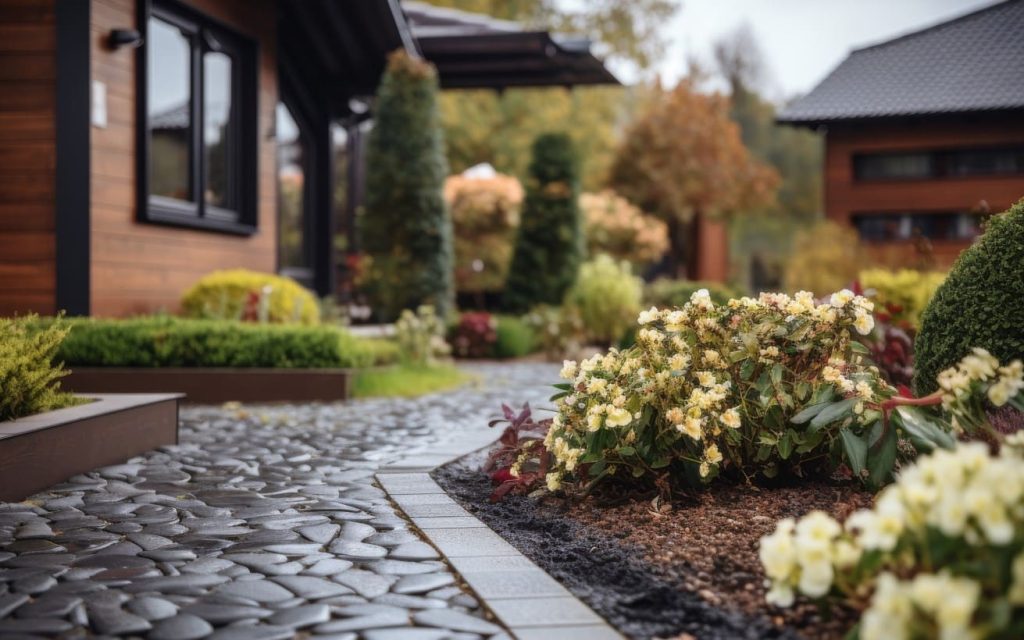
- Start with circulation. Where you naturally walk should dictate where your paths and patios go.
- Repeat colours and materials. Tie the warm tones of your paving to the colours in your planting palette.
- Layer your planting. Mix trees, shrubs, perennials, and groundcover so the garden feels lush and full.
- Pay attention to edging. Crisp steel, brick, or stone edging keeps your beds looking neat and prevents soil spilling onto the patio.
- Plan for drainage. Ensure your hard surfaces are permeable where possible, and run off into planted areas rather than overwhelming the drains.
Common mistakes we see (so you don’t have to learn the hard way)
- Overpaving the space. Turning the back garden into something resembling a car park creates a harsh, uninviting environment.
- Skipping the soil prep. If you plant into compacted, poor-quality soil, your expensive plants will simply sulk and die.
- Ignoring the levels. Water will always collect exactly where you least want it if the drainage falls are calculated incorrectly.
- Planting without a cohesive plan. Buying random plants at the garden centre and hoping for the best usually results in a chaotic jumble.
How we handle soft and hard landscaping at Eden Horticultural
We approach every garden with a horticulture-led mindset. Plants are never an afterthought for us. Established in 2009, we draw on extensive RHS experience to ensure your garden thrives long after the heavy machinery has left.
Because we’re experienced Essex landscape gardeners, we handle the entire process in-house. We start by listening to how you want to use the space during our initial consultation. From there, we manage the concept design, the messy groundworks, the patio laying, and the final intricate planting. We even build bespoke ponds and water features if you want to add a sensory element to the space.
Our team is always courteous, tidy, and highly respectful of your property. We want you to enjoy the process of watching your garden transform just as much as you enjoy the final result.
Frequently asked questions
What’s the main difference between soft landscaping and hard landscaping in the UK?
Hard landscaping involves the structural, non-living elements like patios, walls, and paths. Soft landscaping refers to the living components, including plants, turf, trees, and the soil itself.
Is decking hard landscaping?
Yes. Even though timber is a natural material, decking is a built, structural element that dictates the function and levels of a garden.
Is turfing soft landscaping?
Absolutely. Laying a lawn involves living grass and requires proper soil preparation, making it a core part of soft landscaping.
Which is more expensive: hard landscaping or soft landscaping?
Hard landscaping usually requires a larger initial outlay due to the cost of materials (like stone or porcelain), machinery, and the labour involved in groundworks. However, opting for large, mature trees in a soft landscaping scheme can also require a significant budget.
Do I need planning permission for hard landscaping?
Sometimes. You generally need permission for extensive terracing, very high walls, or paving a front garden with non-permeable materials. We always advise checking your local guidelines before starting work.
What order should landscaping be done in?
Design comes first. After that, the heavy groundworks and hard landscaping are completed, followed by the soil preparation and soft landscaping.
When is the best time of year to do soft landscaping in the UK?
Autumn and spring are the best times for planting and turfing. The soil is usually moist and warm enough to encourage root growth without the stress of summer droughts.
Ready to give your garden both good bones and great hair?
A truly beautiful garden relies on a careful partnership. Hard landscaping delivers the essential structure, function, and stability. Soft landscaping breathes life, colour, and seasonal joy into the space. When you get both right, you create an outdoor area that practically begs you to spend time in it.
If you are ready to discuss your ideas, our team is here to help. We specialise in delivering high-quality garden landscaping that balances practical needs with stunning horticultural design. Head over to our contact page to get in touch, and let us help you build a dream garden that is thoroughly grounded in reality.